Materials & Process
Cedar vs. Pressure-Treated vs. Composite Fencing: An Honest Comparison for Ontario Winters
For most Toronto backyards: pressure-treated wins on price ($30 to $55 per linear foot installed), cedar wins on looks and natural longevity ($45 to $75), and composite wins on zero maintenance ($55 to $95). Ontario's freeze-thaw cycles are the real test: the fence that fails early here almost always fails at the posts, not the boards, which means installation quality matters more than the material you pick.
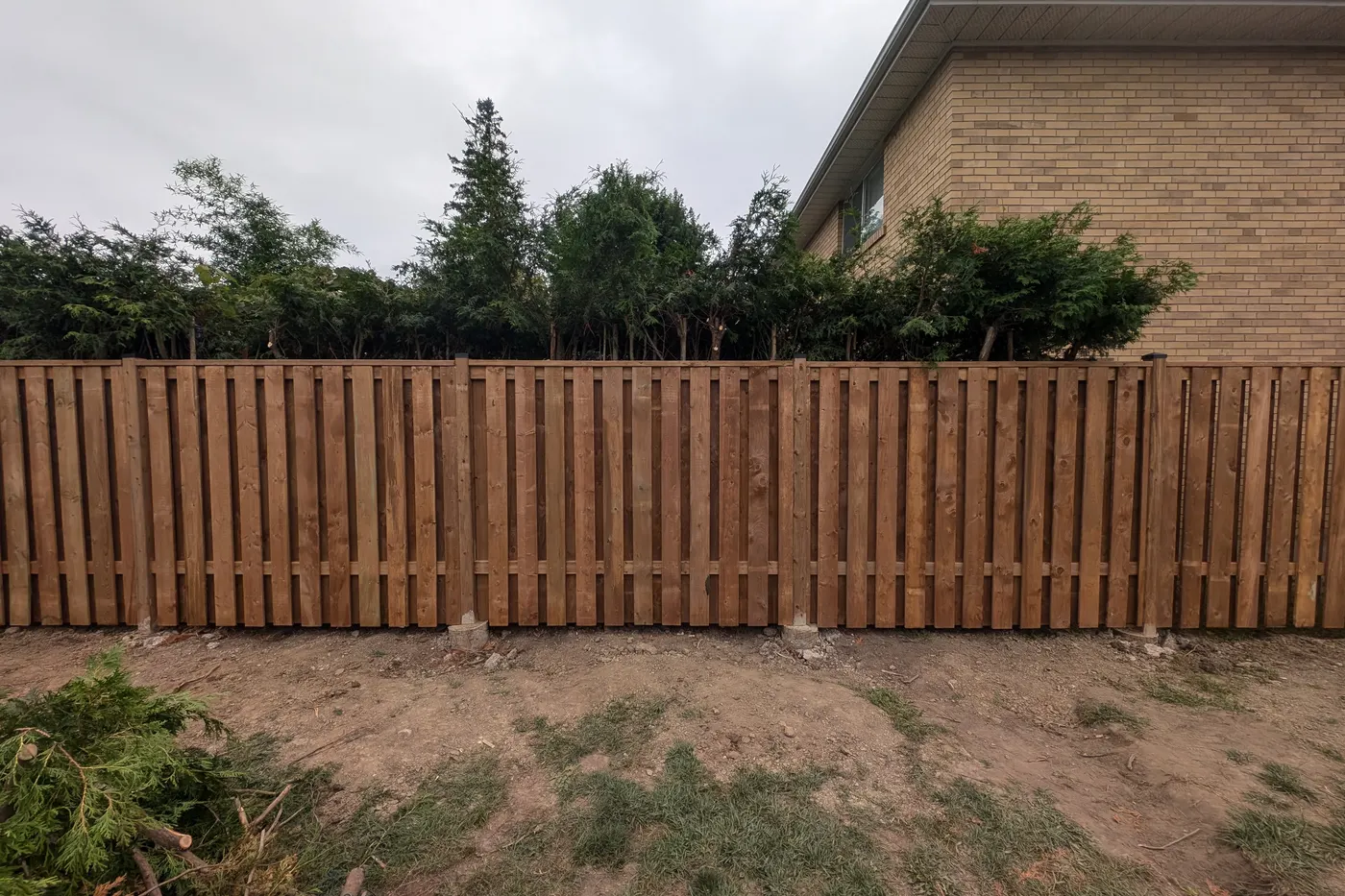
The three materials, honestly
| Pressure-treated | Cedar | Composite | |
|---|---|---|---|
| Installed $/linear ft | $30 - $55 | $45 - $75 | $55 - $95 |
| Lifespan | 15 - 20 yrs | 20 - 30 yrs | 25 - 30+ yrs |
| Maintenance | Stain every 2-3 yrs | Optional; greys to silver if left | Wash |
| Winter behaviour | Moves: warps, checks as it dries | More stable than PT | Most stable; slight expansion gaps needed |
| Repairability | Easy, cheap, board-by-board | Easy, boards cost more | Panel/board swap, must match product line |
| Looks at year 10 | Depends entirely on your staining discipline | Silver-grey patina (a feature or a flaw, your call) | Close to day one |
Pressure-treated is the workhorse. Fresh PT lumber arrives wet and moves as it dries in place: expect some warping and checking in year one, which is normal, not a defect. Its lifespan is honestly a maintenance question; stained on schedule it goes 20 years, neglected it looks tired by year 8.
Cedar is naturally rot- and insect-resistant, more dimensionally stable than PT, and the only one of the three that ages gracefully without help. The silver-grey weathered look divides people; if you'd hate it, budget for periodic sealing and you've narrowed the gap to PT's maintenance load.
Composite brings deck economics to fencing: highest upfront cost, near-zero upkeep, best colour retention. Two caveats: panel systems are proprietary, so a repair in year 12 depends on the product line still existing, and dark colours on full sun exposures can expand enough that proper gapping at install matters.
Why fences actually fail in Ontario
The boards get the attention; the posts do the failing. Freeze-thaw cycles heave posts that weren't set below frost depth, and rot attacks posts at the ground line where moisture sits. A composite fence on badly set posts leans in five years; a PT fence on proper footings stands straight in twenty.
What proper looks like: posts set at least 1.2 m deep (below Toronto frost line), concrete crowned to shed water away from the post, or ground screws/spikes in appropriate soils, and gravel at the base of the hole for drainage. When comparing quotes, ask about post depth and footing method before you ask about board species.
One of the worst demos we've ever done makes the point. An old chain link fence that should have been a quick tear-out turned into a genuine fight: the posts were set in far more concrete than anyone expected, and the ground simply did not want to give them back. We cursed whoever built it the entire day, but credit where it's due: after decades of Ontario freeze-thaw, those posts hadn't gone anywhere. That's the whole lesson of this article in one miserable afternoon. The material above ground had long been worth replacing; the work below ground had outlasted everything. Set the posts right (deep, drained, crowned) and the fence above them becomes a choice you get to make once instead of twice.
Two more options worth knowing
- Vinyl (PVC): $45 - $85 per foot, zero maintenance, but quality varies wildly. UV-stabilized, cold-rated product handles Ontario winters; bargain vinyl goes brittle and cracks. Limited colours, and repairs mean full panel replacement.
- Metal (aluminum/steel): $35 - $65 per foot for ornamental styles. No privacy, superb longevity, the default for pool enclosures and front yards in older neighbourhoods.
The quick decision guide
- Tight budget, don't mind staining: pressure-treated
- Want it beautiful and natural, okay with grey or occasional sealing: cedar
- Never want to think about it again, staying 10+ years: composite (or quality vinyl)
- Pool enclosure or front yard: aluminum
FAQ
Which fence lasts longest in Ontario? On proper posts: composite and quality vinyl (25-30+ years), then cedar, then pressure-treated. On bad posts, none of them.
Can I mix materials? Common and smart: pressure-treated or steel posts with cedar or composite boards puts the durability where the failure happens and the beauty where you see it.
Do I need to stain both sides of a wood fence? Ideally yes for even weathering, which is one more reason to settle the good-side question with your neighbour before building.
Is winter a bad time to install a fence? Frozen ground slows digging, but installs run most of the year, and off-season booking is when pricing is softest. See our best time to build guide.
Compare materials priced for your fence line: Get your estimate →