Neighbours & Property Lines
Can I Build a Fence Right on the Property Line in Ontario?
Yes. In Ontario you can build a fence up to, or directly on, your property line. If you build it entirely on your side, you don't need your neighbour's permission. If you want it exactly on the line so it's shared, you need your neighbour's agreement, because half of it sits on their land. The catch most homeowners miss: "the fence" includes the posts and concrete footings, not just the boards. A fence face on your side with footings bulging under your neighbour's lawn is an encroachment.
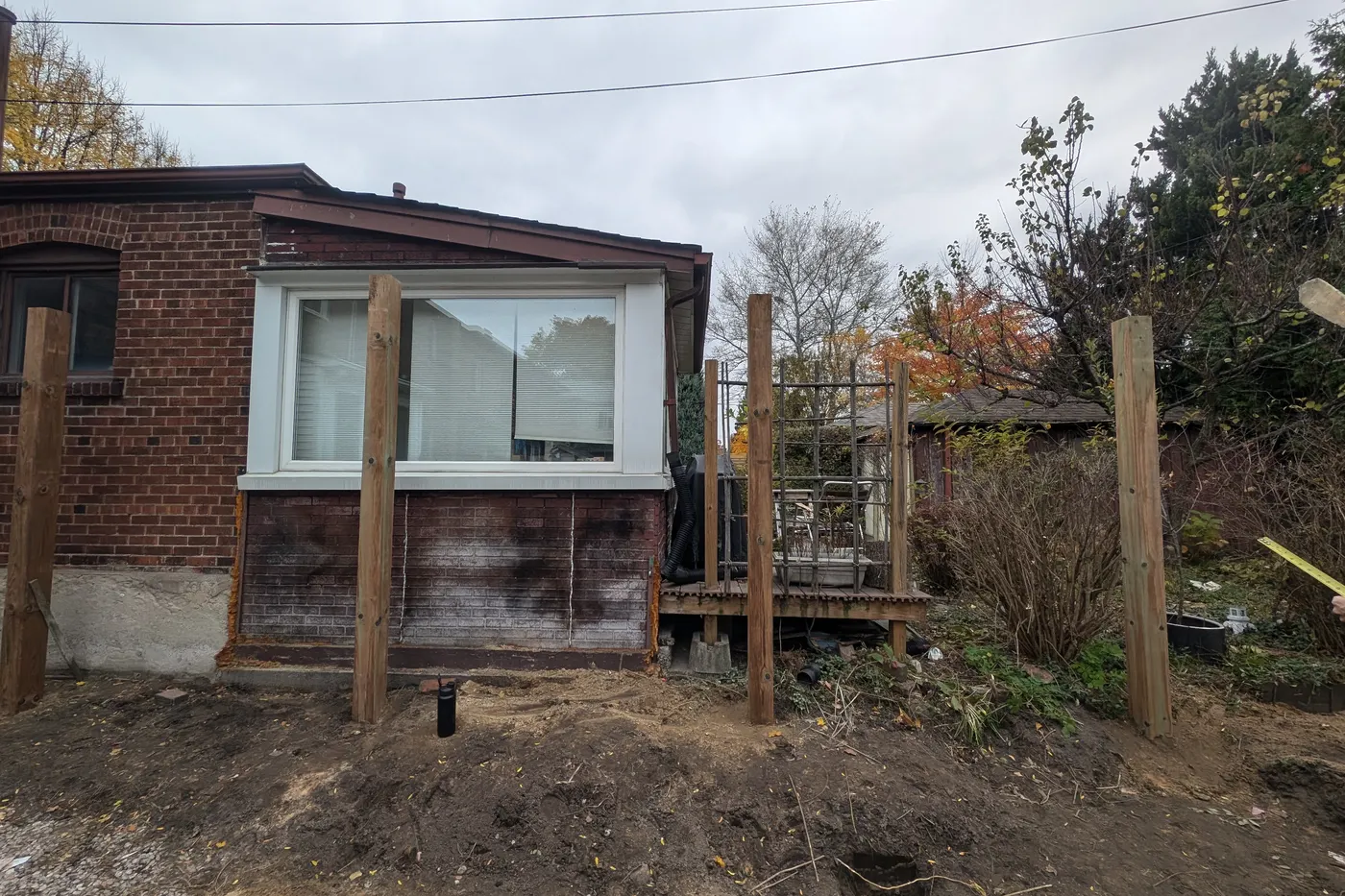
The three placement options
| Placement | Neighbour's permission needed? | Who owns it |
|---|---|---|
| Fully on your side, set back slightly | No | You |
| On your side, tight to the line | No, but footings must not cross | You |
| Centred on the property line | Yes | Shared |
Building fully on your own side gives you total control over material, height, and timing. Centring it on the line splits ownership and, ideally, cost, but everything from stain colour to future repairs now requires two households to agree.
Know where the line actually is
The single biggest cause of fence disputes is a wrong assumption about the boundary. The existing old fence is not proof of the property line; fences drift over decades of replacements.
- Check your survey. Your Real Property Report or surveyor's certificate from when you bought the home shows the boundaries.
- Look for survey bars. Iron bars at lot corners mark the legal boundary, though they can be buried or disturbed.
- Order a new survey if in doubt. A residential survey typically costs $1,500 to $2,500 in the GTA. Expensive, but far cheaper than tearing out a new fence that's 8 inches onto your neighbour's lot.
In all the fences we've built, I don't think we've ever pulled a survey that matched exactly how the garden looked. There is almost always some minor variation between where things sit and where the line actually runs. So our process is the same every time: check the paper, then talk to the neighbours and get everyone on the same page before anything permanent happens, because a conversation costs nothing and a poured footing is very hard to move. The jobs where this goes smoothly are consistently the ones where the neighbours already have a decent relationship. Building that before you build the fence is the cheapest boundary insurance there is.
Rules that still apply
Being on your own land doesn't exempt you from Toronto's Fence Bylaw (Municipal Code Chapter 447):
- Height: generally up to 2.0 m in rear and side yards; roughly 1.2 m in front yards near the street. Going taller needs a Fence Exemption Application ($200, non-refundable, and your neighbours get notified).
- Materials: barbed wire, sheet metal, and electric fences are prohibited on residential property.
- Corner lots: open-construction rules apply near driveways and intersections so drivers can see.
Other GTA municipalities (Mississauga, Vaughan, Markham) have their own height and setback rules, so confirm locally before building.
Talk to your neighbour anyway
Even when the law doesn't require it, a five-minute conversation before the crew arrives prevents most conflicts. Share the design, confirm they agree on the boundary, and put anything about shared costs in writing. If the relationship is already tense, build entirely on your side and skip the shared-fence conversation.
FAQ
Can my neighbour stop me from building a fence on my own property? No, as long as it complies with municipal bylaws. They can complain to the city about height or material violations, so build to code.
Do fence posts count as part of the fence for boundary purposes? Yes. Posts and concrete footings on your neighbour's side of the line are an encroachment even if the boards face your yard.
Can I attach my fence to my neighbour's existing fence? Not without permission. Their fence is their property.
How close to the property line can I dig footings? Right up to it, provided nothing crosses. In practice, installers set posts a few inches inside the line to keep footing concrete on your side.
This article is general information, not legal advice. For boundary disputes, consult a surveyor or real estate lawyer.
Planning a fence? Get a realistic price range for your project in about 60 seconds. Get your estimate →