Neighbours & Property Lines
Do I Need My Neighbour's Permission to Replace a Shared Fence?
If the fence sits on the property line, yes: it's jointly owned, and you can't remove or replace it without your neighbour's consent, even if you pay for everything. If the fence is entirely on your own property, no permission is needed. So the real first question is never "can I replace it?" but "whose land is it actually on?"
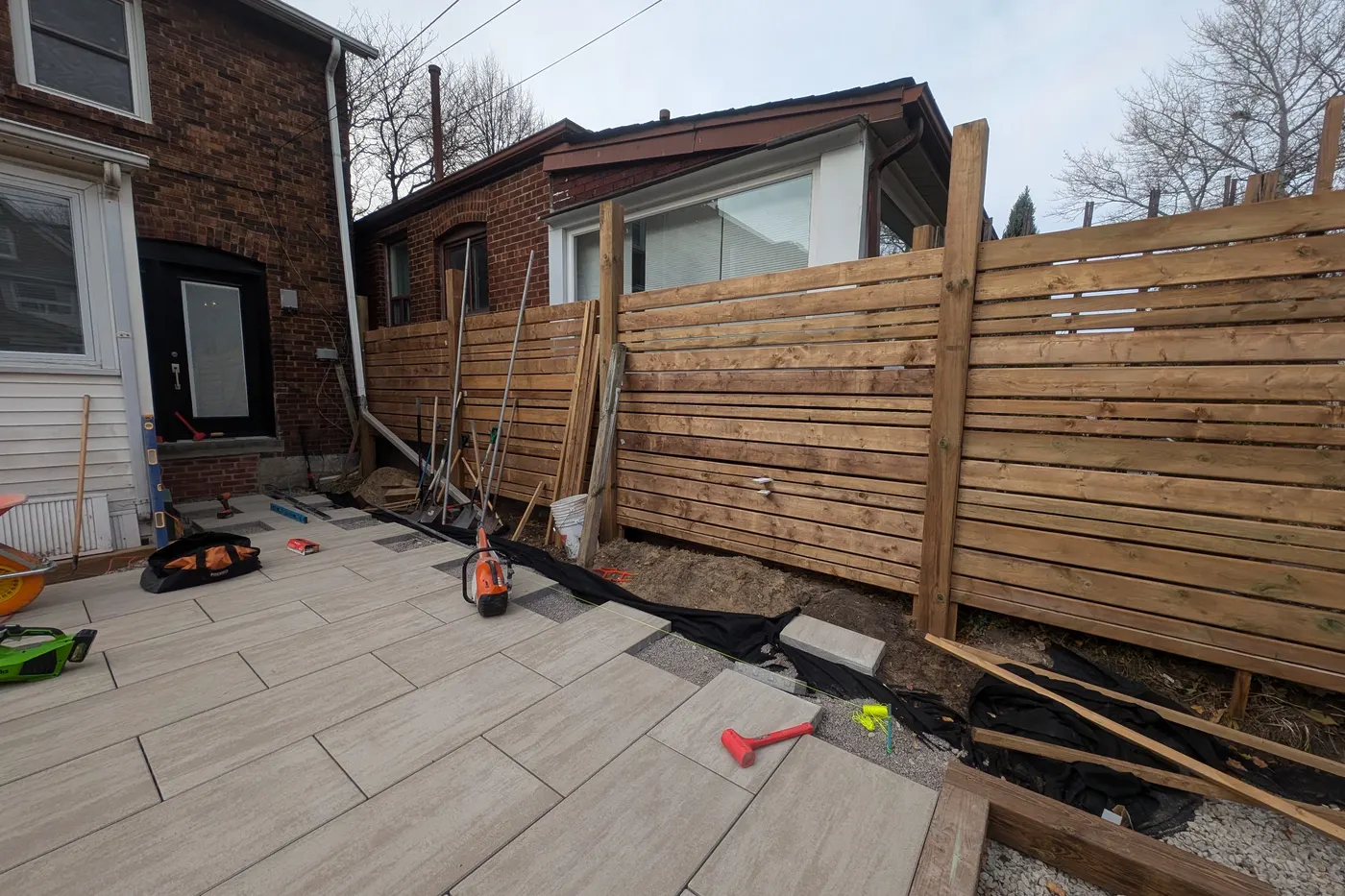
First, figure out what "shared" means
| Where the fence sits | Who owns it | Permission to replace? |
|---|---|---|
| Entirely on your side of the line | You | No |
| Entirely on their side | Them | Yes, it's their fence |
| On the line | Both, jointly | Yes |
Check your survey. Decades-old fences frequently turn out to be a foot inside one lot or the other, which changes the whole conversation. A fence you assumed was shared may simply be yours.
Replacing a genuinely shared fence
You need agreement on three things:
- That it's being replaced. Even a rotten shared fence can't be unilaterally demolished. Removing it without consent is technically destroying jointly owned property.
- The spec. Height, material, style, and which way any "good side" faces.
- The money. In Toronto there's no law forcing a split (the city opted out of the Line Fences Act in 2018), so cost sharing is whatever you two agree, in writing.
A practical script: "The fence is at end of life. I'm getting quotes for a 6-foot pressure-treated replacement on the same line. Are you in for half, or would you rather I build my own on my side?" That framing gives them a real choice and protects you either way.
If your neighbour says no
You cannot force a replacement of a shared fence. Your clean alternative: build a new fence entirely on your own side, inches from the old one if necessary, to any legal spec you like. You own it outright, no permissions needed beyond the bylaw. The old shared fence becomes their maintenance problem.
Before going that route, one more attempt is usually worth it. Most refusals are about money or timing, not the fence, and offering to carry more of the cost, or to schedule after their summer, resolves many of them.
If the neighbour's side is a rental, or they're unreachable
Contact the property owner, not the tenant; tenants can't authorize work on the landlord's fence. For absentee or unresponsive owners, document your attempts in writing, then build on your own side.
Bylaw notes for the new fence
Toronto's Chapter 447 applies to the replacement: up to 2.0 m in rear/side yards, about 1.2 m in front yards, no prohibited materials, corner-lot visibility rules. A like-for-like replacement of a compliant fence rarely needs any city involvement. Going taller than the limit requires a Fence Exemption Application ($200), and your neighbours are notified as part of that process, so get them onside first.
A pattern we've run into more than once: the neighbour is delighted about a new fence and considerably less delighted about paying for one. That's not bad faith, it's timing. Your fence being at end of life doesn't mean their budget agrees, and you being ready doesn't mean they are. Saying no to a cost they didn't plan for is entirely reasonable. When it happens, the decision comes back to you as the homeowner: carry the full cost yourself and build, or wait a season and ask again. Both are legitimate, and neither is worth souring twenty years of living beside someone.
FAQ
My neighbour replaced our shared fence without asking. Is that legal? They shouldn't have. Jointly owned fences require consent for removal. In practice, if the new fence is decent, most people let it go; if it's a downgrade or misplaced, document it and raise it, with a lawyer if needed.
Can I stain or repair my side of a shared fence without asking? Minor maintenance to your side (staining, replacing a board that fell into your yard) is generally fine. Structural changes and post replacement should be agreed.
We agreed 50/50 verbally and now they won't pay. What now? A verbal agreement is a contract but hard to prove. Small claims court is available for the amount, though rarely worth it under a few thousand dollars. This is why we push for the confirmation email before work starts.
Does the new fence have to match the rest of the street? No. There's no aesthetic bylaw for residential fences in Toronto outside of heritage districts and pool-enclosure rules.
This article is general information, not legal advice.
Pricing a replacement? Get a realistic range to share with your neighbour before the conversation. Get your estimate →