Costs
Why Deck Quotes for the Same Project Range From $12,000 to $28,000
Three contractors look at the same backyard and quote $12,000, $19,000, and $28,000. Usually nobody is ripping you off: the quotes describe three different projects. The spread comes from what's included (footings, railings, permits, demolition, joist protection), what's assumed (site access, soil), and what the business behind the quote costs to run (insurance, WSIB, warranty). The skill isn't finding the lowest number; it's making the quotes describe the same deck so the numbers become comparable.
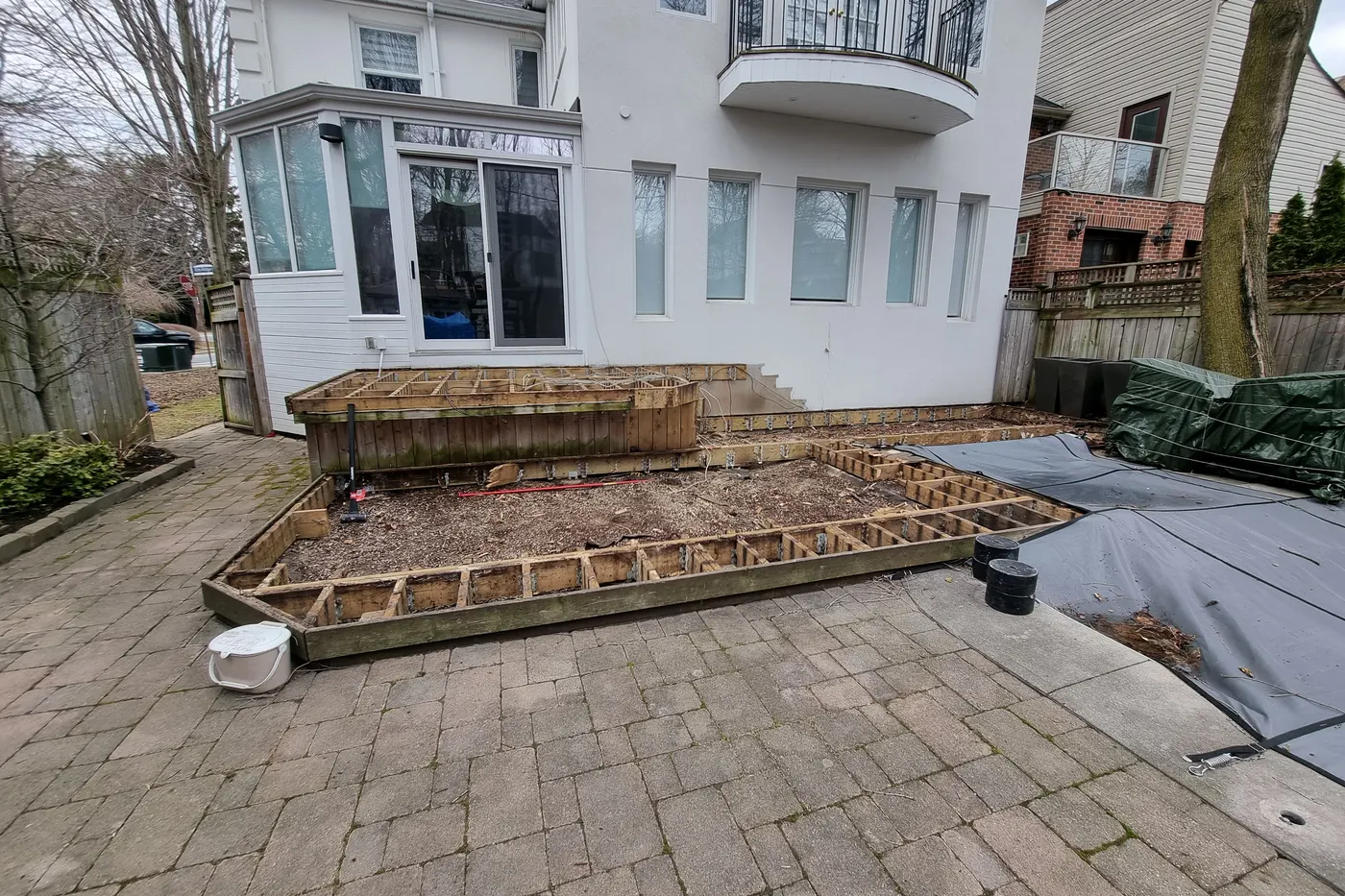
Where the spread actually comes from
| Line item | Cheap quote | Complete quote | Swing |
|---|---|---|---|
| Footings | Deck blocks or minimal piers | Concrete/helical below frost line, engineered spacing | $1,500 - $4,000 |
| Railings | Basic wood, or "by others" | Aluminum or glass, code-compliant | $1,500 - $5,000 |
| Old deck removal | Not included | Demolition + disposal | $500 - $2,000 |
| Permit + drawings | "Homeowner to obtain" | Included, handled, closed | $700 - $2,500 |
| Joist protection tape | Skipped | Included on composite builds | $300 - $800 |
| Hardware & flashing | Builder-grade | Stainless/coated, proper ledger flashing | $200 - $800 |
| Insurance, WSIB, warranty | Maybe | Priced in | 10 - 20% |
A $12,000 quote missing five of those rows and a $22,000 quote including all of them can be the same margin on very different decks.
The three quotes, decoded
The $12,000 quote is often a small crew or side operation with low overhead. Sometimes that's a genuine bargain from a good builder keeping busy. Sometimes it's deck blocks instead of footings, no permit, no insurance, and a phone number that stops answering in year two. The quote itself won't tell you which; the questions below will.
The $19,000 quote is typically an established company pricing the full scope with standard materials and its overhead. This is usually the "what the project really costs" number.
The $28,000 quote is either premium spec (glass railings, PVC decking, helical piles), a busy company pricing to only take jobs worth its while, or design-build overhead. Ask what's driving it; the answer is usually specific and legitimate, and occasionally it's simply not the right fit for your project.
Seven questions that make quotes comparable
- What footing system, how deep, and how many?
- Are railings included, and to what spec?
- Who pulls the permit and produces drawings, and is that priced in?
- Is demolition and disposal of the existing deck included?
- Are you WSIB-registered and carrying liability insurance? (Ask for certificates, not assurances.)
- What's the warranty on workmanship, in writing?
- Exactly which decking product and railing product, by brand and line?
Send all bidders the same answers and ask them to re-quote to that spec. The spread typically collapses from 130 percent to 20 percent, and the remaining gap is real differences in overhead and quality.
Red flags that aren't about price
- Large deposit demands (much beyond materials) before work starts
- "No permit needed" for an attached or elevated deck (see our permit guide)
- No written scope, just a total
- Pressure to sign same-day for a "today only" price
The widest gap we've ever seen wasn't between our quote and another builder's. It was between our quote and the client's imagination. We priced a garden makeover in the eight-to-ten-thousand range, and the client had been expecting something in the hundreds. Not a negotiation gap, different worlds. Nobody was wrong about the work itself; they just hadn't priced what it costs to do it legitimately in Toronto: labour rates, materials, dump fees, insurance, WSIB. Those line items exist in every honest quote before a single board is bought, and they're a large part of why a real quote can never compete with a number imagined at the kitchen table.
FAQ
Should I just take the middle quote? No. Normalize the scope first. The middle quote can be the worst value once you see what each includes.
Is a low quote ever legitimate? Yes: hungry good builders exist, especially in the off-season. The difference between a bargain and a trap is verifiable insurance, real references, and a written scope matching the others.
How many quotes should I get? Three is the sweet spot. Five quotes rarely add information, and the best builders often decline to bid against a crowd.
Why do quotes expire? Lumber and composite prices move. A 30-day validity window is normal, not a pressure tactic.
Want a baseline before you collect quotes? Our estimator gives you an independent range so you can spot the outliers. Get your estimate →